Net Power Surrendered Its Clean Dreams to Data Center Demand
The zero-emission pioneer is doing the dirty work for the AI boom.
Get the latest as our experts share their insights on global energy policy.
This Energy Explained post represents the research and views of the author(s). It does not necessarily represent the views of the Center on Global Energy Policy. The piece...

Hear in-depth conversations with the world’s top energy and climate leaders from government, business, academia, and civil society.
After years of trying, the US may be on the cusp of a nuclear renaissance. Commercial nuclear generation began in this country in 1958. Today, the US has...
Find out more about our upcoming and past events.
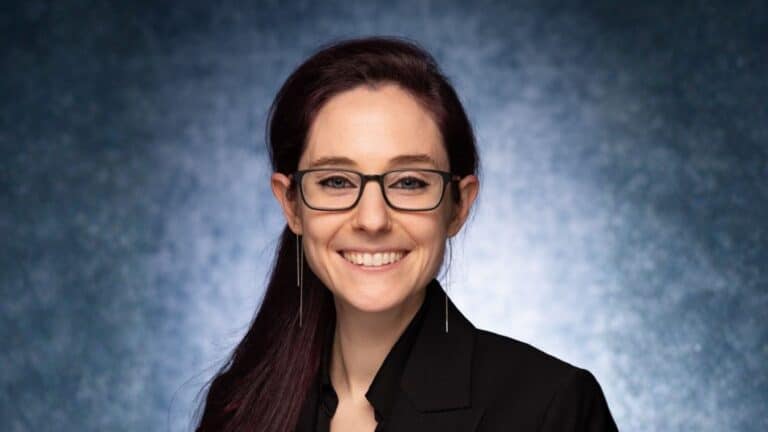
Dr. Claudia Castro will share insights into her professional journey and the role of financial markets in shaping energy investments.
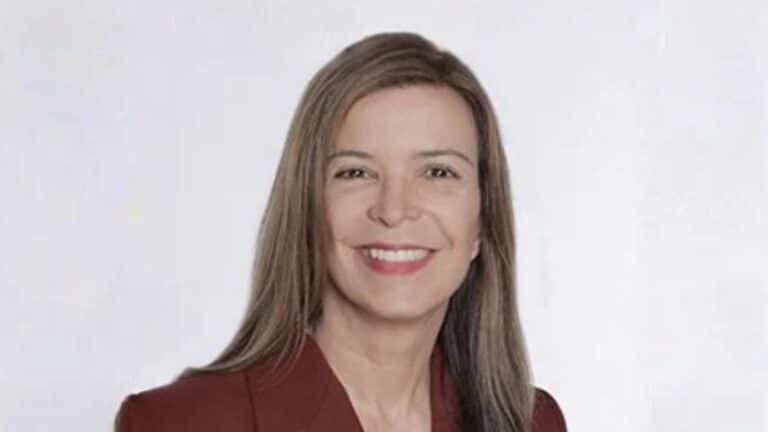
Washington, D.C. – Paul Dabbar, Distinguished Visiting Fellow at the Center on Global Energy Policy (CGEP) at Columbia University SIPA and Chairman and CEO of Bohr Quantum Technologies, has been invited to testify before the House Committee on Science, Space, and Technology on Wednesday, June 7, 2023.
“We are currently at the forefront of a game-changing technology that will have a profound impact on our economy and national security,” said Dabbar. “The United States is leading the way in quantum computers and networks. Now is the perfect time to accelerate increased research and faster deployment of these technologies.”
The hearing will evaluate the state of quantum research, development, and technology (RD&T) in the U.S., review the first five years of the National Quantum Initiative Act (NQIA), and examine policy considerations for the next five years. The hearing will also inform the reauthorization of the NQIA program, which expires on September 30, 2023.
Prior to joining the Center, Dabbar served as Under Secretary for Science at the U.S. Department of Energy (DOE) from 2017-2021. At DOE, he served as the principal advisor on fundamental energy research, energy technologies, science, and commercialization of technologies. He also oversaw key areas of research including basic energy sciences, nuclear and high energy physics, advanced computing, and fusion.
Additional witnesses include Dr. Charles Tahan, Director, National Quantum Coordination Office, OSTP; Dr. Eleanor G. Rieffel, Senior Researcher for Advanced Computing and Data Analytics, NASA/Ames Research Center; Dr. Celia Merzbacher, Executive Director, Quantum Economic Development Consortium; and Dr. Emily Edwards, Executive Director, IQUIST, University of Illinois.
The hearing will be live streamed at 10:00am ET on the House committee’s website. Dabbar’s oral and written testimonies will be available at energypolicy.columbia.edu on June 7.
The zero-emission pioneer is doing the dirty work for the AI boom.
Tatiana Mitrova, a fellow at Columbia University’s Center on Global Energy Policy and former energy scholar at Moscow’s Russian Academy of Sciences, and Sergey Vakulenko, an oil and gas expert at Carnegie’s Russia Eurasia Center, argue that Russia and Ukraine are locked in an energy war that has become an adaptation spiral, despite growing human and economic costs and despite current US pressure on Ukraine. They observe Ukraine’s remarkable ability to withstand Russian strikes, while questioning claims that long-range Ukrainian strikes will be able to achieve game-changing damage on Russia. Ukraine and Russia have transformed the role of energy warfare in modern conflict, drawing on low costs drones but also new forms of technological resilience that are likely to make wars longer and more dangerous.

This Energy Explained post represents the research and views of the author(s). It does not necessarily represent the views of the Center on Global Energy Policy. The piece...
The interactive tool estimates how the Bipartisan American Affordability and Jobs Act could impact the permitting and construction timelines of different types of energy projects.