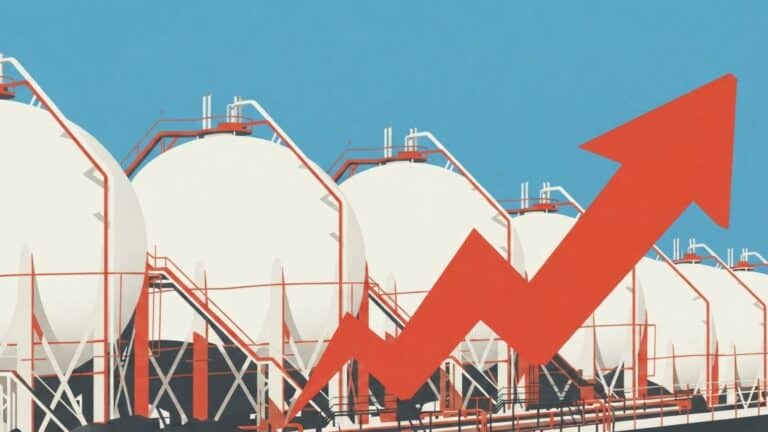
Europe’s economy faces a one-two punch from extreme weather and war
Soaring temperatures are forcing drastic measures in Europe, where heatwaves are straining an economy under pressure from higher energy prices due to the Iran war.
Get the latest as our experts share their insights on global energy policy.
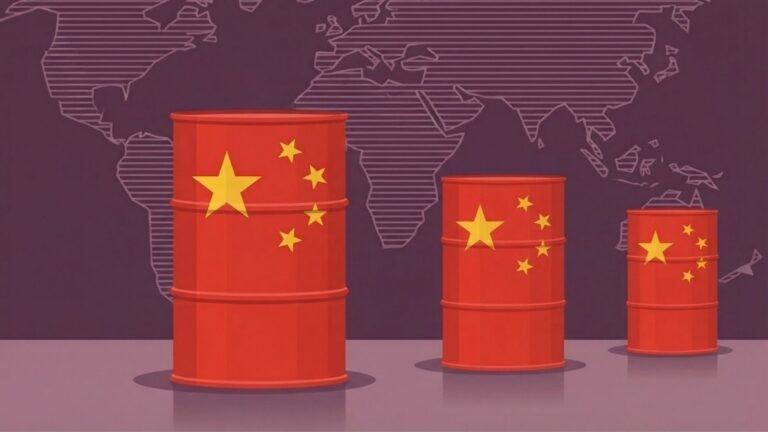
The ongoing disruption of oil exports through the Strait of Hormuz has caused a substantial decline in China's crude oil imports.
Hear in-depth conversations with the world’s top energy and climate leaders from government, business, academia, and civil society.
It started last year as a pressure campaign at sea, with the United States seizing tankers as part of what President Trump called a “total and complete blockade”...

Find out more about our upcoming and past events.
Join industry leaders, innovators, employers, and emerging talent for an evening exploring the technologies, trends, and career opportunities shaping the future of climate tech.

Paul Dabbar, Distinguished Visiting Fellow at the Center on Global Energy Policy (CGEP) at Columbia University SIPA and Chairman and CEO of Bohr Quantum Technologies, will testify before the US Senate Committee on Environment and Public Works on Wednesday, November 1, 2023. The hearing will examine the nexus between climate change and the intensification of extreme weather events.
“Technology and policy innovation plays a critical role in driving down global emissions,” said Paul Dabbar, Distinguished Visiting Fellow at CGEP. “In the United States, collaboration among experts, universities, and the federal government, both at agencies and at the National Labs, has significantly advanced climate science. Prioritizing technology-neutral policies and fostering healthy competition are essential measures for lowering emissions and driving American innovation to new heights.”
Prior to joining the Center, Dabbar served as Under Secretary for Science at the U.S. Department of Energy (DOE) from 2017-2021. At DOE, he served as the principal advisor on fundamental energy research, energy technologies, science, and commercialization of technologies. He also oversaw key areas of research including basic energy sciences, nuclear and high energy physics, advanced computing, and fusion.
Additional witnesses include Dr. Jennifer Jurado, Chief Resilience Officer and Deputy Director Resilient Environment Department for Broward County, Florida; and Dr. Michael F. Wehner, Senior Scientist, Applied Mathematics and Computational Research Division at the Lawrence Berkeley National Laboratory.
The hearing will be live streamed at 10:00am ET on the Senate committee’s website. Dabbar’s testimony will be made available at energypolicy.columbia.edu on November 1.
Soaring temperatures are forcing drastic measures in Europe, where heatwaves are straining an economy under pressure from higher energy prices due to the Iran war.
China has published a new five-year plan for coal, the latest in a slew of important policy documents for the country’s energy transition.
Cheniere Energy intensifies Capitol Hill lobbying on LNG exports amid tariffs and tax changes. Discover the industry's key policy priorities.
Enjoy the videos and music you love, upload original content, and share it all with friends, family, and the world on YouTube.
By almost any measure, the world should be suffering a far more severe energy crisis.

The ongoing disruption of oil exports through the Strait of Hormuz has caused a substantial decline in China's crude oil imports.
Amid the surge in US gas demand coming from LNG exporters, there is a lack of equivalent new working gas storage capacity in the US.