Kuwait looks to the cloud as power grid feels the strain
Kuwait has invited bids to construct three power substations that will supply electricity to Google Cloud data storage centres
Current Access Level “I” – ID Only: CUID holders, alumni, and approved guests only
Get the latest as our experts share their insights on global energy policy.
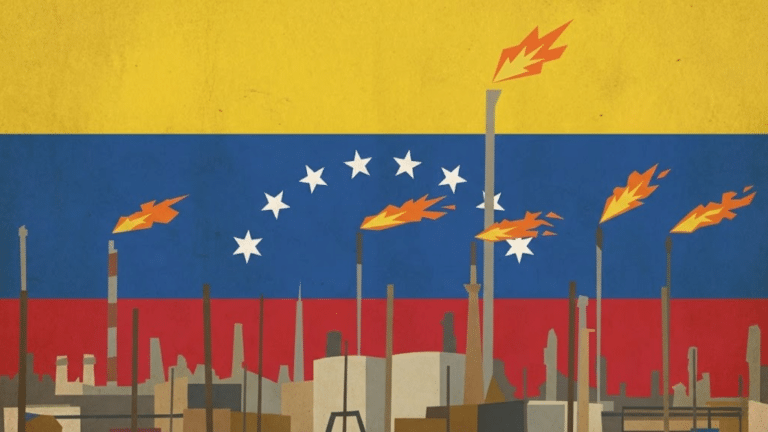
Venezuela holds 70% of Latin America's natural gas reserves, which it could export to Colombia and Trinidad to increase revenues.
Hear in-depth conversations with the world’s top energy and climate leaders from government, business, academia, and civil society.
From the affordability crisis and the data center boom, to the US government’s campaign to reinvigorate the Venezuelan oil market, energy is dominating headlines in unusual ways. And...

Find out more about our upcoming and past events.
The Center on Global Energy Policy at Columbia University SIPA's Women in Energy initiative and Accenture invite you to join us for an evening of conversation and networking...

Past Event
January 26, 2024
10:00 am - 11:30 am est
The humanitarian impact of the climate crisis on vulnerable communities, which have historically contributed the least to climate change, is now recognized in scholarship and policy. The question of financial payments–from developed to low-income countries– for loss and damage resulting from climate change was front and center recently at the world’s largest climate gathering, the 2023 United Nations Climate Change Conference (COP28). What has received far less attention is climate justice within countries, such as India, that have deep-rooted and intersecting structures of inequality based on caste, gender, and religion.
Please join the Ambedkar Initiative at the Institute for Comparative Literature & Society, the Center on Global Energy Policy (CGEP) at Columbia University’s School of International and Public Affairs, the SIPA Diversity, Equity, Inclusion, Climate & Engagement (DEICE) Committee, Columbia Climate School, and South Asia Institute for a series of discussions examining social and economic justice issues related to climate change and energy transition in India. The first session, “Environmental Casteism and Climate Disaster,” will focus on how the climate crisis is reinforcing the vulnerabilities of oppressed communities and highlight the importance of an anti-caste framework for research and practice.
Two experts, scholar Srilata Sircar and Pulitzer-Grantee Journalist Suprakash Majumdar, will be in a conversation moderated by Deepali Srivastava, editor of CGEP’s Energy Explained. Dr. Anupama Rao, director, the Institute for Comparative Literature and Society, and the convenor of the Ambedkar Initiative will deliver welcome remarks. This series honors the legacy of Columbia University alum and India’s civil rights icon, Dr. Bhimrao Ambedkar (1891–1956) as an economist and an environmental rights leader, whose vision builds a bridge from past to present.
Biography
Dr. Srilata Sircar is a lecturer in India and global affairs at the King’s India Institute, where she leads the “Introduction to Global Affairs” and “Contemporary India” modules. Trained as an urban geographer, Sircar received her doctoral degree from Lund University, Sweden in 2017. With a prior background in history and development studies, her research interests include urban political ecology of South Asia, the politics of caste in infrastructure-building, and the political economy of subaltern urbanization. Srilata is a contributing writer for Feminism in India.
Suprakash Majumdar is a Pulitzer-Grantee Journalist working on social justice issues in South Asia through the lens of caste. They have worked on a range of issues ranging from climate justice, politics, and COVID-19, analyzing underreported issues in underreported communities. They’ve been published in The New Humanitarian, Time Magazine, VICE, Al Jazeera, Rest of World, and more.
—
This webinar will be hosted via Zoom. Advance registration is required. Upon registration, you will receive a confirmation email with access details. The event will be recorded and the video recording will be added to our website following the event.
This event is open to press, and registration is required to attend. For media inquiries or requests for interviews, please contact CGEP Communications ([email protected]).
For more information about the event, please contact [email protected].
The Columbia Global Energy Summit 2026 is an annual event dedicated to thought-provoking discussions around the critical energy and climate challenges facing the global community.
This event is open to Columbia University students only. Join the Center on Global Energy Policy’s Women in Energy initiative for an interactive discussion on human rights and...
*Registration is closed for this event. The Center on Global Energy Policy at Columbia University SIPA's Women in Energy initiative, in collaboration with the Columbia Policy Institute, invites...

While various efforts continue to be made to estimate fashion’s environmental footprint, major gaps remain in how to decarbonize material production and reshape business practices.

Models can predict catastrophic or modest damages from climate change, but not which of these futures is coming.

On November 6, 2025, in the lead-up to the annual UN Conference of the Parties (COP30), the Center on Global Energy Policy (CGEP) at Columbia University SIPA convened a roundtable on project-based carbon credit markets (PCCMs) in São Paulo, Brazil—a country that both hosted this year’s COP and is well-positioned to shape the next phase of global carbon markets by leveraging its experience in nature-based solutions.
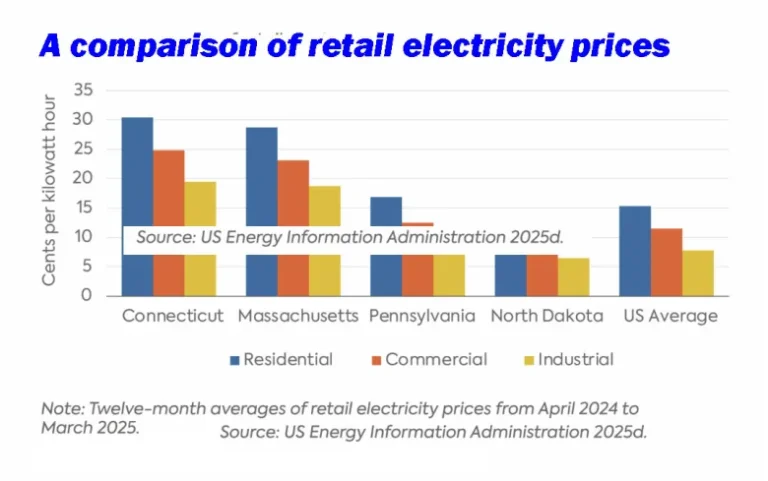
Connecticut needs an honest debate, and fresh thinking, to shape a climate strategy fit for today, not 2022.