Did Carbon Actually Score A Quiet Win In Congress?
When Congress approved the Fiscal Year 2026 spending bills last month, many in the carbon sector braced for cuts but reality appears more optimistic.
Current Access Level “I” – ID Only: CUID holders, alumni, and approved guests only
Get the latest as our experts share their insights on global energy policy.
The United States is at a rare inflection point for nuclear energy, with unprecedented momentum behind deployment and regulatory reform as nuclear becomes central to energy security, AI competitiveness, and state and corporate climate goals.
Hear in-depth conversations with the world’s top energy and climate leaders from government, business, academia, and civil society.
With electricity prices on the rise, the future of our power grid is attracting a lot more attention. Surging demand is at the center of the story, but...

Find out more about our upcoming and past events.
This workshop will be conducted in two parts: Part one on February 16 from 1:00 PM to 2:00 PM EST, and Part two on February 18 from 1:00 PM to...

Past Event
November 7, 2019
8:00 am - 9:15 am
Join the Center on Global Energy Policy for a breakfast and roundtable discussion with Eirik Wærness, Equinor’s Senior Vice President for Macroeconomics and Market Analysis, Chief Economist and Head of Strategy in Marketing, Midstream and Processing. During this student-only breakfast, Mr. Wærness will discuss his work at Equinor, academic and job histories, and career paths. Biography Eirik Wærness is Equinor’s Senior Vice President for Macroeconomics and Market Analysis, Chief Economist and Head of Strategy in Marketing, Midstream and Processing, and has a broad experience in government, academia and private sector companies. He currently serves as a non-executive board member of Innovation Norway and is a non-resident fellow at the Payne Institute at the Colorado School of Mines. In 2018 Eirik served as a member of IRENA’s Global Commission on the Geopolitics of Energy Transformation. During 2016 to 2018 he was a non-executive member of the Board of the Norwegian Financial Supervisory Authority. He worked with the World Economic Forum in different work groups and as an expert advisor from 2014 to 2018, and served as an executive board member at the Central Bank of Norway from 2010 to 2013. Eirik’s previous leadership roles in Equinor were in Corporate Strategy, Corporate Planning and Analysis, Economic Analysis in Upstream Norway, and Energy Market Analysis. Prior to Equinor he had various positions at the Norwegian Ministry of Finance, Total E&P Norway and Pöyry Management Consulting/Econ Centre for Economic Analysis. He has also served as member of two public commissions in Norway on tax reforms. — Registration is required. This event is open to all students. There is limited capacity for this event. We ask that you register only if you are sure you can attend this event in its entirety. Breakfast will be provided. For more information contact: [email protected].
This workshop will be conducted in two parts: Part one on February 16 from 1:00 PM to 2:00 PM EST, and Part two on February 18 from 1:00 PM to...
Join the NYU SPS Center for Global Affairs, the Center on Global Energy Policy at Columbia University SIPA Women in Energy Initiative (WIE), and the NYU SPS Energy,...
The Center on Global Energy Policy (CGEP) at Columbia SIPA and the Fashion, Energy, and Climate Network invite you to join the first session of our new talk...

The Center on Global Energy Policy at Columbia University SIPA is pleased to host a virtual webinar with experts from Kenya, India, and Brazil to discuss and better understand the landscape...
The United States is at a rare inflection point for nuclear energy, with unprecedented momentum behind deployment and regulatory reform as nuclear becomes central to energy security, AI competitiveness, and state and corporate climate goals.
Multiple US–Iran conflict scenarios carry materially different risks for global oil infrastructure, transit routes, and prices.
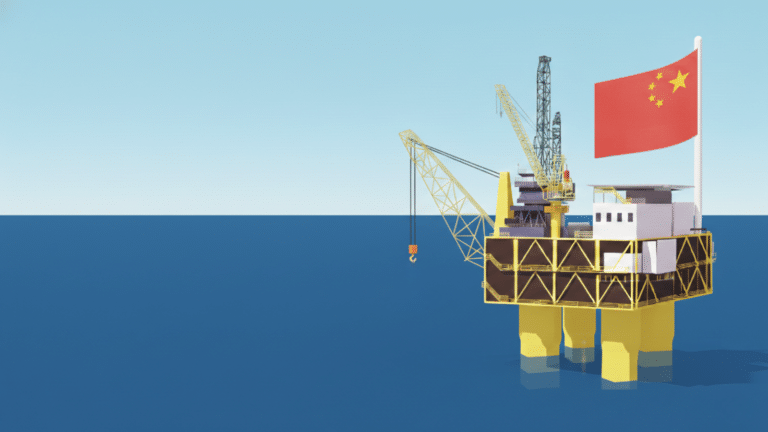
China’s crude oil imports hit a record-high 11.6 million barrels per day in 2025, as geopolitical tensions, low oil prices, and global oversupply spurred China to increase its oil stockpiles, a trend likely to continue in 2026.