Current Access Level “I” – ID Only: CUID holders, alumni, and approved guests only
Read more about the campus status level system and campus access information.
This website uses cookies as well as similar tools and technologies to understand visitors’ experiences. By continuing to use this website, you consent to Columbia University’s usage of cookies and similar technologies, in accordance with the Columbia University Website Cookie Notice.
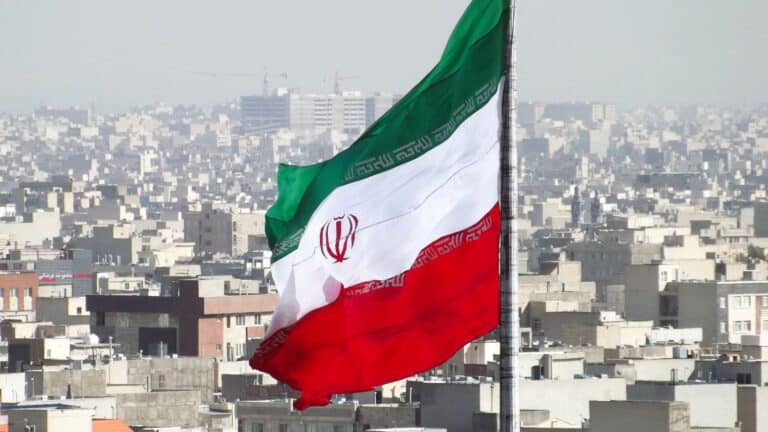
On February 28, the United States and Israel launched a campaign against Iran targeting military infrastructure and the regime's core leadership. Supreme Leader Ayatollah Ali Khamenei and several...
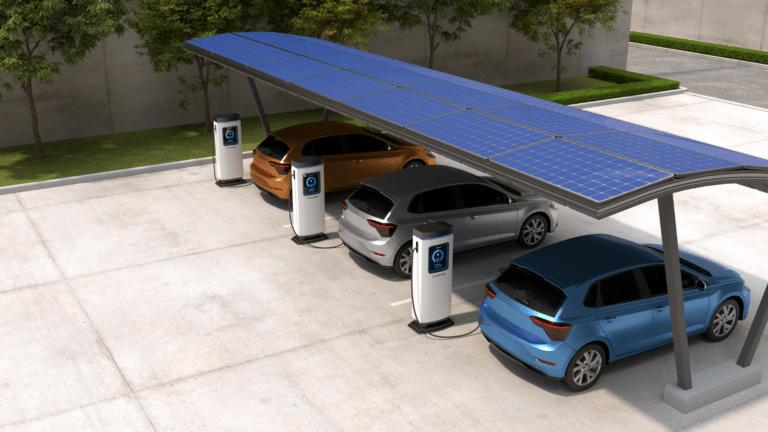
Join us for an in-person event exploring careers and opportunities in the rapidly evolving electric vehicle and sustainable transportation ecosystem.
Event
• International Affairs Building, 15th Floor
Columbia University
About Us
We are the premier hub and policy institution for global energy thought leadership. Energy impacts every element of our lives, and our trusted fact-based research informs the decisions that affect all of us.
As we come to the end of 2022, it is clear that the global energy system that we had at the start of the year is not the one we will have when the clock strikes midnight on December 31st.
Vladimir Putin’s unjustified invasion of Ukraine—and the subsequent horrors of that war—made Europe come to terms with its dependency on Russian energy, triggered a global energy crisis, and brought renewed focus to the importance of ensuring energy security—along with the urgency of climate change. Global leaders took unprecedented actions to cope with energy price spikes and shortages, culminating this month with the implementation of the G7’s price cap on Russian oil and Europe’s adoption of a gas price cap. These policies are part of a broader trend toward greater government intervention in the energy sector—spurred on by the energy crisis—which @Meghan L. O’Sullivan and I wrote about this summer in Foreign Affairs Magazine. And throughout these unprecedented shifts to the global energy system, significant change would also happen here at home. Not only would the United States become a major source of natural gas supply to Europe, but out of Washington’s gridlock, lawmakers passed the #InflationReductionAct —the most significant investment in climate action this country has ever seen.
To reflect on how we got here, I’ve been looking back through some of the pieces that I published over the past 12 months. One of the defining themes of this year is a concern that I articulated at the start of the year alongside @Meghan L. O’Sullivan: We argued that petrostates are going to experience “feast before the famine” during the energy transition, and will wield heightened geopolitical leverage as the world grapples with the complexities of the transition to clean energy. We outlined this argument in full in a Foreign Affairs Magazine piece called “Green Upheaval,” named “Best of 2022” by Foreign Affairs, which laid out the geopolitical risks of a bumpy path to net zero and what governments could do to anticipate and smooth that road.
Later in January, as Europe was already coping with an energy crisis, and it seemed increasingly unlikely that diplomacy could prevent Vladimir Putin from invading Ukraine, we foreshadowed the extent to which governments could weaponize energy supplies in broader geopolitical conflict. We wrote in @The New York Times: “As energy prices soar, preparing for crises in which state-controlled energy suppliers are able to exert outsize geopolitical and economic clout must be a priority for Western leaders.”
Over the next several months, that prediction became a reality. Russia began to restrict natural gas flows in an attempt to fracture Western unity against his aggression. As energy prices soared, it became clear that governments would have to play a larger role in energy markets, as free markets simply weren’t delivering energy security or climate action.
Of course, government intervention in energy markets conjures the ghost of the 1970s. In Foreign Affairs Magazine, Meghan and I expanded on our arguments, identifying three specific market failures that government policy could address: enhancing security through diversity of supply, incentivizing the fossil fuel investments needed to meet energy needs during a time of acute shortage, and internalizing the social cost of carbon.
On stage at the World Economic Forum discussing the energy crisis with Robert Habeck, Catherine MacGregor, Fatih Birol, Hardeep Singh Puri, and Vicki Hollub.
The dual urgency of both energy security and the energy transition rose to the top of the agenda at every conference I attended—including Davos, the Munich Security Conference, Aspen Ideas: Climate, CERAWeek, the Aspen Security Forum, and COP27. Nonetheless, it seemed unlikely that the United States would meaningfully act on climate change before the midterm elections—something Meghan and I observed in this column in Foreign Policy would undermine American national security, not just climate ambition.
Then, all of a sudden, we had the #InflationReductionAct: A real, meaningful investment in the energy transition in America. The new law carries a tremendous promise—but also some significant geopolitical risks. Throughout the fall I made the case that #IRA implementation will be a defining challenge for America’s diplomatic corps; and that if they can navigate these hurdles, the new climate law has the potential to not just dramatically increase the global pace of the energy transition, but also America’s leadership. The new policy also brought with it challenges. It engendered significant backlash from trade partners, something I wrote in the The New York Times, which Europeans were right to be concerned about. European attacks, however, on the United States’ energy policies were unwarranted. Instead, the #InflationReductionAct provides new and continued opportunities for US-EU cooperation to accelerate the shift to clean energy and secure new supply chains.
At COP27 in Egypt, CGEP hosted a discussion on mobilizng finance for clean energy with Jason Bordoff, Jake Levine, Tariye Gbadegesin, Nathalie Delapalme, and Andrew Kamau.
As the year comes to a close, I am reminded once again of the vital importance of international cooperation to tackle the twin challenges of energy security and climate change. Traveling to Sharm El-Sheik for #COP27 was a powerful reminder that the global energy transition has to be truly global—and that includes financing clean energy in the developing world. During the conference, we were thrilled to announce the creation of CGEP’s new Energy Opportunity Lab, which will collaborate with communities around the world—and here in the US—to improve opportunities for sustainable energy inclusion, innovation, and growth.
Europe’s Energy Commissioner Kadri Simson at Columbia University.
I had the pleasure of welcoming some of the most prominent energy leaders from around the world, including Europe’s Energy Commissioner Kadri Simson, Executive Vice-President of the European Commission Frans Timmermans, and the late OPEC+ Secretary General Mohammed Barkindo. And this fall, we had our first in-person Global Energy Summit since the start of the Covid-19 pandemic. It was a huge success, convening the sharpest minds in climate and energy on the Columbia University campus in New York City. We hosted two former U.S. Energy Secretaries, U.S. Deputy Treasury Secretary Wally Adeyemo, U.S Deputy Secretary of Energy David Turk, and so many others.
This has been a year for those of us working on energy policy will not soon forget. It’s also an exciting time to be leading the Center on Global Energy Policy at Columbia | SIPA. I spent this year traveling around the world with our amazing scholars. Getting the opportunity to partner with them every day and learn from the transformative work they produce is one of the most rewarding aspects of my job. We have been growing quickly, and I’m so lucky to work with such a talented, committed, generous, passionate, and fun group of friends & colleagues at CGEP.
As we ring in 2023, CGEP will be marking our 10th anniversary this spring with a major event on April 12, 2023 in New York City on Columbia’s campus (more details to come on that celebration soon!). As we celebrate this milestone, I could not be more proud of what the team at the Center on Global Energy Policy has built and the impact it has achieved or more excited about what lies ahead. The future of CGEP has never been brighter—nor the need for our work more evident every day.
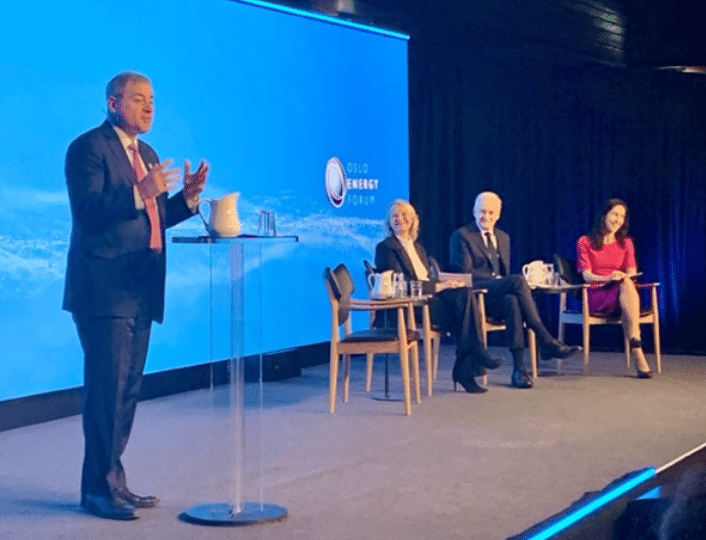
I’m en route home after a week in Europe—first at the Oslo Energy Forum and then at the Munich Security Conference. Munich generated considerable news and drama, but...