How Ukraine’s drone strikes on Russia crippled the world’s second-largest diesel supplier
President Donald Trump has blamed Ukraine for surging diesel prices that are hurting Republicans' election chances with the midterms just two weeks away.
Get the latest as our experts share their insights on global energy policy.
Reporting in the New York Times suggests a key element in the Trump administration's Russia-Ukraine peace plan involves Europe resuming Russian gas imports.

Hear in-depth conversations with the world’s top energy and climate leaders from government, business, academia, and civil society.
After years of trying, the US may be on the cusp of a nuclear renaissance. Commercial nuclear generation began in this country in 1958. Today, the US has...

Find out more about our upcoming and past events.
Registration is closed. Join Women in Energy and Pillsbury in Washington, D.C., for a conversation examining the key trends and developments shaping the energy industry, where opportunities are...

Non-Resident Fellow; Former Distinguished Visiting Fellow; Former US Deputy National Security Advisor
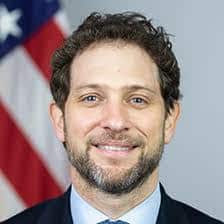
Jon Finer served as President Joseph R. Biden’s principal deputy national security advisor from 2021–25. Prior to joining President Biden’s staff, he was global head of geo-political and policy affairs at Warburg Pincus LLC and an adjunct senior fellow for US foreign policy at the Council on Foreign Relations. Before that, he was chief of staff and director of policy planning at the US Department of State, where he previously served as deputy chief of staff for policy. He also previously worked for four years at the White House, including as senior adviser to then-deputy national security adviser Antony Blinken and as special adviser for the Middle East and North Africa and foreign policy speechwriter for then-Vice President Biden. He first joined the Obama administration in 2009 as a White House Fellow, assigned to the Office of the White House chief of staff and the National Security Council staff.
Prior to entering government service, Finer was a foreign and national correspondent for the Washington Post, where he reported from more than 20 countries. He spent 18 months covering the war in Iraq, first embedded with the US Marines during the 2003 invasion and later based in Baghdad in 2005–06. He also covered conflicts in Gaza (2009), Russia/Georgia (2008), and Israel/Lebanon (2006), as well as the 2004 US presidential campaign, and the 2004 Major League Baseball playoffs.
Finer will simultaneously serve as a Carnegie Distinguished Fellow at SIPA’s Institute of Global Politics.