Current Access Level “I” – ID Only: CUID holders, alumni, and approved guests only
Campus open to active affiliate Columbia University ID (CUID) holders and approved guests only.
Columbia students, faculty, and staff can use the guest registration portal to register up to two same-day guests. Alumni can use the portal to register for campus same-day access as well. Learn more below.
This website uses cookies as well as similar tools and technologies to understand visitors’ experiences. By continuing to use this website, you consent to Columbia University’s usage of cookies and similar technologies, in accordance with the Columbia University Website Cookie Notice.
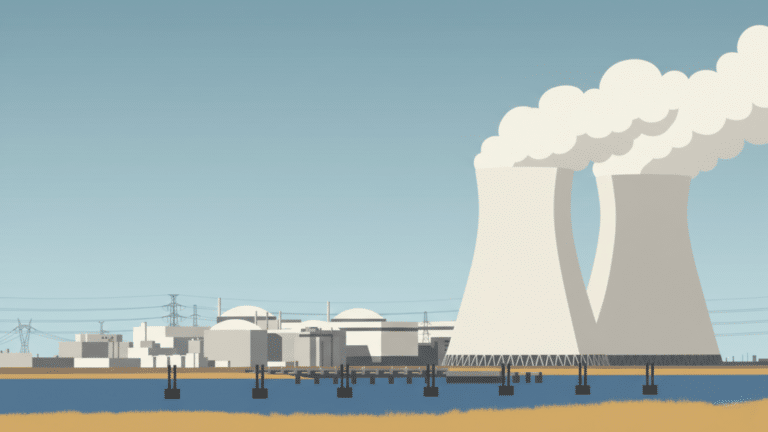
The United States is at a rare inflection point for nuclear energy, with unprecedented momentum behind deployment and regulatory reform as nuclear becomes central to energy security, AI competitiveness, and state and corporate climate goals.
As political support for clean energy has waxed and waned over the past twenty years, so has the government’s financial backing. In the 2010s, critics pointed to the...
This workshop will be conducted in two parts: Part one on February 16 from 1:00 PM to 2:00 PM EST, and Part two on February 18 from 1:00 PM to...
Event
• Center on Global Energy Policy
1255 Amsterdam Ave, New York, NY 10027
About Us
We are the premier hub and policy institution for global energy thought leadership. Energy impacts every element of our lives, and our trusted fact-based research informs the decisions that affect all of us.
Russia, Europe, And The Gas Revolution: Firms And Geopolitics In The Age Of Shale
Past Event
April 7, 2014
12:00 pm - 1:30 pm
Share
The Center on Global Energy Policy and the Harriman Institute hosted a discussion with Rawi Abdelal, Professor of International Management at Harvard Business School. The European-Russian energy relationship has been deeply affected by the unconventional gas revolution in the United States. As European and Russian energy firms respond, those same firms are remaking patterns of geopolitics. Alexander Cooley, Professor of Political Science at Barnard College and Deputy Director for Social Sciences Programming, Harriman Institute, moderated the discussion following the presentation.
Share
Related
More Events
February 16, 2026 - February 18, 2026
• 1:00 pm - 2:00 pm
est
Join the NYU SPS Center for Global Affairs, the Center on Global Energy Policy at Columbia University SIPA Women in Energy Initiative (WIE), and the NYU SPS Energy,...
Event
• NYU Kimmel Center for University Life
60 Washington Square South, 9th Floor, New York, NY 10012
The Center on Global Energy Policy (CGEP) at Columbia SIPA and the Fashion, Energy, and Climate Network invite you to join the first session of our new talk...
Event
• Center on Global Energy Policy
1255 Amsterdam Ave, New York, NY 10027
The Center on Global Energy Policy at Columbia University SIPA is pleased to host a virtual webinar with experts from Kenya, India, and Brazil to discuss and better understand the landscape...
The decline of domestic fossil fuel production in the United States poses serious economic risks for communities that rely on fossil fuel industries for jobs and public revenues. Many of these communities lack the resources and capacity to manage those risks on their own. The absence of viable economic strategies for affected regions is a barrier to building the broad, durable coalitions needed for an equitable national transition to cleaner energy sources.
The United States is at a rare inflection point for nuclear energy, with unprecedented momentum behind deployment and regulatory reform as nuclear becomes central to energy security, AI competitiveness, and state and corporate climate goals.