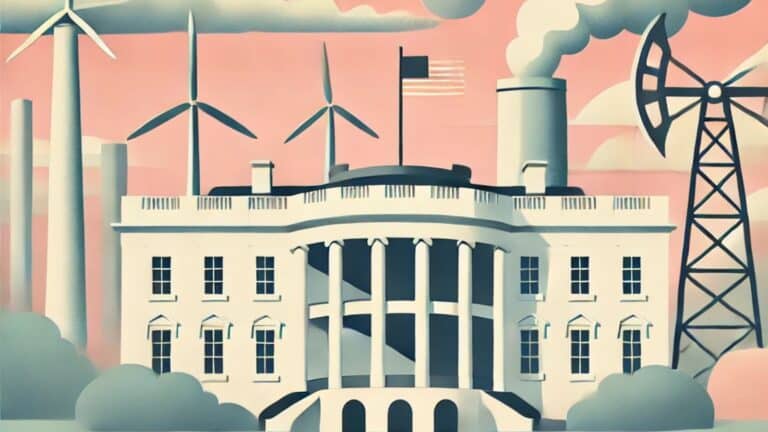
Power prices are expected to soar under new tax cut and spending law
In states without policies to drive renewable energy, power prices could surge as federal tax incentives for clean energy disappear, according to Energy Innovation, a think tank.
Current Access Level “I” – ID Only: CUID holders, alumni, and approved guests only
Get the latest as our experts share their insights on global energy policy.
This special CGEP blog series, featuring six contributions from CGEP scholars, analyzes the potential impacts of the OBBBA across a range of sectors.
Hear in-depth conversations with the world’s top energy and climate leaders from government, business, academia, and civil society.
Many parts of the US have experienced brutal, deadly heat in recent weeks—and there’s plenty of summer left. Intense rainfall, made more likely by warming, dropped more than...

Past Event
March 27, 2019
11:30 am - 12:30 pm
Stuart Eizenstat was at Jimmy Carter’s side from his political rise in Georgia through four years in the White House, where he served as Chief Domestic Policy Adviser. He was directly involved in all domestic and economic decisions as well as in many foreign policy ones. Famous for the legal pads he took to every meeting, he draws on more than 5,000 pages of notes and 350 interviews of all the major figures of the time, to write the comprehensive history of an underappreciated president―and to give an intimate view on how the presidency works. On Wednesday, March 27, Eizenstat joins Jason Bordoff, Founding Director, Center on Global Energy Policy and Professor of Professional Practice in International and Public Affairs at Columbia University, and Stephen Sestanovich, Kathryn and Shelby Cullom Davis Professor for the Practice of International Diplomacy at Columbia University, for a discussion of his book, President Carter: The White House Years, which has received positive reviews from major publications including The New York Times, The Washington Post, National Review, National Interest, and many others. Eizenstat recalls lasting transformations in American energy policy, ideas about human rights, relations with Iran and China, Middle East diplomacy, and more. Perhaps Jimmy Carter’s single closest adviser, Eizenstat will discuss the achievements, setbacks, and lasting impact — both positive and negative — of one of America’s most controversial leaders. Books will be available for purchase immediately following the conversation. This event is co-sponsored by the Center on Global Energy Policy and the International Fellows Program. — This event is open to press. Media attending the event should register using the registration link below. Media inquiries or requests for interviews should be directed to Artealia Gilliard ([email protected]). Guests unable to attend in person can view a livestream of the event at energypolicy.columbia.edu/livestream. For more information contact: [email protected].
As the Israel-Iran conflict continues to unfold, it remains unclear whether a ceasefire will hold or fighting will resume. This uncertainty carries significant implications for energy markets in the Middle East and around the world.
On the night of June 12, the Israeli military conducted widespread strikes on sites in Iran that targeted the country’s nuclear program and its senior military leadership.
The relationship between the US and Canada, each of which is the other’s principal source of imported energy, has become increasingly fraught in recent months. Canada and the...
Please join the Center on Global Energy Policy at Columbia University SIPA for a rapid response briefing with Kadri Simson, CGEP Distinguished Visiting Fellow, Institute of Global Politics Carnegie Distinguished Fellow,...

China’s dependence on the energy supplies that move through the Strait of Hormuz makes it especially vulnerable to any possible closure of the waterway by Iran in retaliation for attacks by Israel and the United States.

President Donald Trump has made energy a clear focus for his second term in the White House. Having campaigned on an “America First” platform that highlighted domestic fossil-fuel growth, the reversal of climate policies and clean energy incentives advanced by the Biden administration, and substantial tariffs on key US trading partners, he declared an “energy emergency” on his first day in office.