This website uses cookies as well as similar tools and technologies to understand visitors’ experiences. By continuing to use this website, you consent to Columbia University’s usage of cookies and similar technologies, in accordance with the Columbia University Website Cookie Notice.
Energy Explained
Get the latest as our experts share their insights on global energy policy.
G7 Progress on Critical Minerals Diversification Overlooks Demand Side
This Energy Explained post represents the research and views of the author(s). It does not necessarily represent the views of the Center on Global Energy Policy. The piece...

Podcasts
Hear in-depth conversations with the world’s top energy and climate leaders from government, business, academia, and civil society.
Doug Arent and Robin Millican on What’s Really Driving Electricity Prices
Concerns about the affordability of electricity in the US have been rising along with prices. And while the headlines have pointed to AI and data centers as the...
News
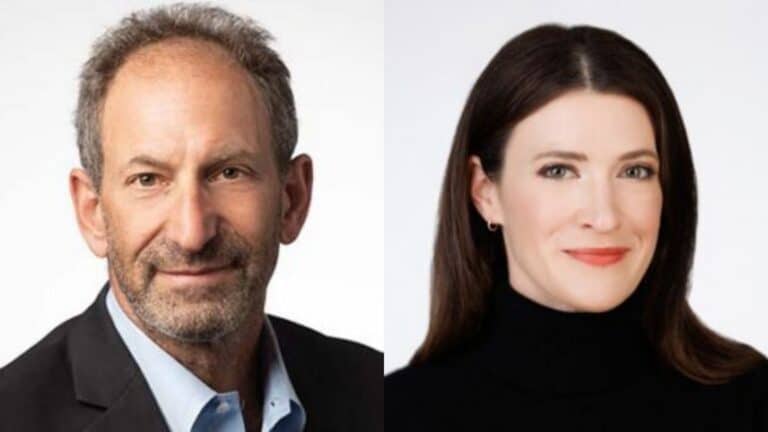
CGEP Distinguished Visiting Fellow Paul Dabbar to Testify before House on Role of AI in Powering America’s Energy Future
October 18, 2023
Washington, D.C. – Paul Dabbar, Distinguished Visiting Fellow at the Center on Global Energy Policy (CGEP) at Columbia University SIPA and Chairman and CEO of Bohr Quantum Technologies, will testify before the U.S. House of Representatives’ Energy & Commerce Subcommittee on Energy, Climate, and Grid Security on Thursday, October 19, 2023. The hearing will examine the role of Artificial Intelligence (AI) in the energy sector, including the potential benefits and challenges of the technology’s development and deployment.
“Today’s hearing underscores the transformative potential of Artificial Intelligence in the clean energy transition,” said Paul Dabbar, Distinguished Visiting Fellow at CGEP. “The U.S. needs to proactively address challenges in power supply and national security. By utilizing AI in government, to strategically address power demands, and to enhance national security measures, we can harness the benefits of AI while safeguarding our energy future.”
Prior to joining the Center, Dabbar served as Under Secretary for Science at the U.S. Department of Energy (DOE) from 2017-2021. At DOE, he served as the principal advisor on fundamental energy research, energy technologies, science, and commercialization of technologies. He also oversaw key areas of research including basic energy sciences, nuclear and high energy physics, advanced computing, and fusion.
Additional witnesses include Edward Abbo, President & Chief Technology Officer, C3 AI; Jeremy Renshaw, Senior Technical Executive – AI, Quantum, and Innovation, Electric Power Research Institute; and Sreedhar Sistu, Vice President, Artificial Intelligence, Schneider Electric.
The hearing will be live streamed at 10:30am ET on the House committee’s website. Dabbar’s testimony will be made available at energypolicy.columbia.edu on October 19.
Related
More News
Has Ukraine Dealt a Lethal Blow to the Russian Oil Sector?
Podcast host Alex Gabuev is joined by Tatiana Mitrova, a global fellow at Columbia University’s Center on Global Energy Policy, to discuss how the latest series of drone attacks and the Middle East conflict have affected the Russian energy industry, and whether they amount to a lethal blow to Putin’s war chest.
World Bank scraps climate financing after facing pressure from Trump
The 45% target was set following the United Nations’ climate conference in 2023, pledging the funding to climate-related projects by 2025.
China is a clear winner from Trump’s war in Middle East, report concludes
Beijing, whose stockpiles and renewables industry allowed it to withstand energy shock, is now gaining from global solar and EV push
Relevant
Publications
Former Iran director at NSC: Crypto legislation is a ticket to sanctions evasion
As the Senate weighs the CLARITY Act, gaps in oversight could hand adversaries new ways to evade sanctions and launder money.
From Supply Shocks to Oversupply: The New Reality for LNG Players
External Publications
with Anne-Sophie Corbeau •
King Abdullah Petroleum Studies and Research Center
• July 01, 2026
Doomsday Climate Scenarios Were Wrong. That Doesn’t Help Europe.
Recent scientific reassessments strengthen the case for rapid climate action rather than weaken it.