On with Kara Swisher: Venezuela After Maduro, Can Trump Control Caracas From Afar?
The arrest of Venezuelan President Nicolas Maduro, on Saturday, sent shockwaves across the globe. And although the targeted military operation was a success, th
Current Access Level “I” – ID Only: CUID holders, alumni, and approved guests only
This website uses cookies as well as similar tools and technologies to understand visitors’ experiences. By continuing to use this website, you consent to Columbia University’s usage of cookies and similar technologies, in accordance with the Columbia University Website Cookie Notice.
Our work is committed to independent and nonpartisan research that meets the high standards of academic integrity and quality at Columbia University.
Our initiatives and programs are designed to address critical needs in key focus areas around energy and climate policy.
Explore our expert insights and analysis in leading energy and climate news stories.
The arrest of Venezuelan President Nicolas Maduro, on Saturday, sent shockwaves across the globe. And although the targeted military operation was a success, th
Get the latest as our experts share their insights on global energy policy.
The US intervention in Venezuela may jeopardize both the flow of discounted Venezuelan oil to China's teapot refineries and the role of Chinese oil companies in Venezuela’s upstream business.
Hear in-depth conversations with the world’s top energy and climate leaders from government, business, academia, and civil society.
Early on January 3, 2026, the United States apprehended Venezuelan President Nicolás Maduro and his wife and removed Maduro from power. Maduro was transported to New York, where he now faces federal charges of narco-terrorism and drug trafficking.
Find out more about our upcoming and past events.
On January 1, 2026, the European Union's highly-anticipated Carbon Border Adjustment Mechanism (CBAM) will take effect. Introduced in 2023, CBAM will require the importers of certain carbon-intensive goods...
We are the premier hub and policy institution for global energy thought leadership. Energy impacts every element of our lives, and our trusted fact-based research informs the decisions that affect all of us.
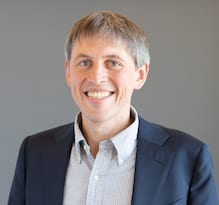
Dr. Olexandr Balyk is a former Senior Research Associate at the Center on Global Energy Policy at Columbia University’s School of International and Public Affairs. His main research interests focus on application and development of energy systems models to support energy and climate policy. Olex is also interested in utilisation of open source software, high performance computing, modern web technology and stakeholder engagement for generating transparent, relevant, and informative energy scenarios. Prior to joining the Center, Dr. Balyk coordinated the development of the TIMES-Ireland Model (TIM) at University College Cork (UCC) which was used to form a significant part of the evidence base used by the Irish Climate Change Advisory Council to develop the first set of carbon budget recommendations. Olexandr also led capacity building activities on energy modelling in Ukraine on behalf of Danish Energy Agency (DEA) in the framework of Government-to-Government cooperation, while at Technical University of Denmark (DTU). He designed and taught a course National Energy System Modelling in TIMES which allowed energy engineering students develop skills necessary to analyse national decarbonisation strategies within just 3 weeks. Olex has a PhD from Technical University of Denmark (DTU), Master’s and Bachelor’s degrees in Economic Cybernetics from Dnipro University of Technology, and a BSc degree in Environmental and Resource Management from Brandenburg University of Technology (BTU).

The rapid expansion of AI has raised concerns about whether and how this new technology may impinge on the ability of the US to meet its zero-carbon electricity goals.
Get the latest news and research on energy & climate policy.
"(required)" indicates required fields